You might think insurance is an unnecessary expense for your budding business, but it’s much more than that—it’s a financial safety net. Without the right protection, the smallest mishap could spell disaster for your entrepreneurial dreams. So, let’s dive into why small business insurance is a must-have and how it can save your commercial enterprise from unforeseen troubles.
Insurance isn’t just about ticking a box; it’s a strategic move that can keep your business afloat when the unexpected happens. From property damage to liability claims, being prepared means you can face these challenges head-on, without crippling financial losses. Let’s break down the essential types of small business insurance you need to know about.
Understanding Small Business Insurance

Did you know that 40% of small businesses never reopen after a disaster? That’s where insurance comes in. It’s your safety net when everything else goes south.
Small business insurance is more than just a legal requirement. It’s a critical component of your business strategy. It protects you from unexpected events that could cripple your business financially.
The Importance of Insurance for Small Businesses
Insurance gives you peace of mind. It ensures your business survives the unexpected, whether it’s a natural disaster, a lawsuit, or equipment damage. With the right policy, you can bounce back from setbacks with minimal damage to your bottom line.
Without insurance, you’re gambling with your business’s future. A single incident could drain your finances and even force you to close up shop. But with the right coverage, you can face challenges head-on, knowing you’re protected.
Types of Risks Small Businesses Face
Every small business faces risks. Whether it’s fire, theft, or a cyber attack, these risks are real and can be devastating. Insurance helps mitigate these risks, giving you a fighting chance to recover and move forward.
From property damage to employee injuries, the list of potential risks is long. But here’s the deal: with insurance, you can minimize their impact. It covers the unexpected costs that come with these risks, so you’re not left footing the bill alone.
Common Insurance Policies for Small Businesses
What types of insurance do you need? It depends on your business. General liability, property insurance, and workers’ compensation are common policies. Each one covers different aspects of your business, ensuring you’re protected from various angles.
For instance, general liability covers legal costs if someone sues your business. Property insurance protects your physical assets, while workers’ compensation takes care of your employees’ injuries. Choose the right mix based on your business’s unique needs.
- General Liability Insurance
- Property Insurance
- Workers’ Compensation Insurance
- Professional Liability Insurance
- Business Interruption Insurance
Financial Implications of Not Having Suitable Business Insurance
The cost of insurance might seem like an unnecessary expense. But here’s the kicker: not having it can cost you way more in the long run. A single lawsuit could wipe out your savings, or worse, lead to bankruptcy.
Without insurance, every risk is a potential financial disaster. You’d have to pay for damages, legal fees, or compensation out of your pocket. Insurance isn’t just a safety net; it’s a critical investment in your business’s future stability.
Pro Tip: Always review and update your insurance policies annually. Your business evolves, and so do its risks.
Commercial Property Insurance

Did you know that 75% of businesses are underinsured against property damage? That’s a staggering number when you consider the risks involved. If you own a business, you can’t afford to be in that statistic.
Commercial property insurance is your safety net. It covers damage to your building, assets, and even income loss due to unforeseen events like fires or theft. But, how do you know what coverage you truly need?
Understanding What It Covers
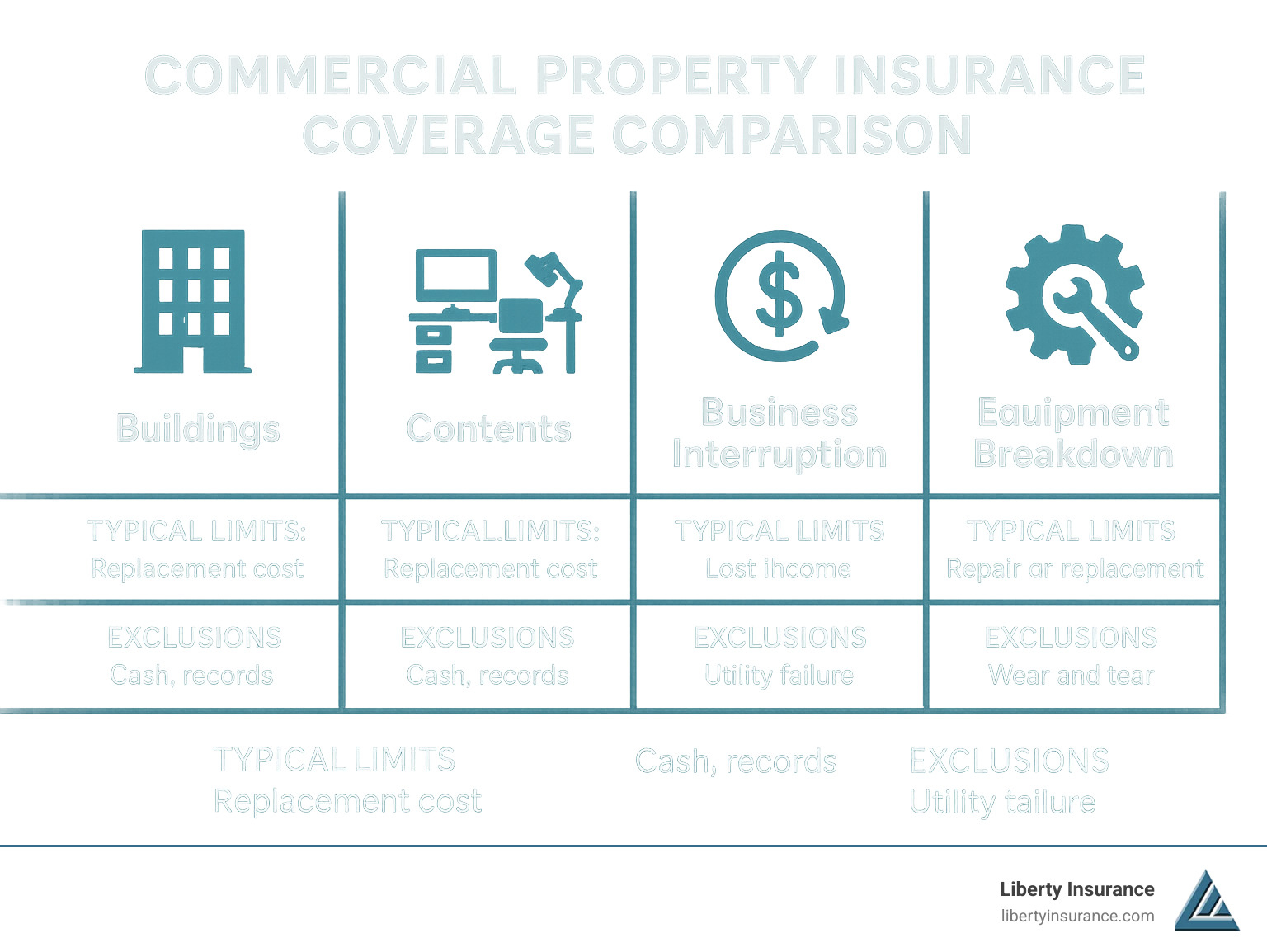
When it comes to commercial property insurance, the coverage is broad. It typically includes buildings, inventory, equipment, and sometimes even landscaping. BUT, here’s the deal: it won’t cover everything. Floods and earthquakes often require separate policies.
Methods for Evaluating Property Value
Accurately evaluating your commercial property’s value is crucial for adequate coverage. Step #1: Conduct a professional appraisal to determine the replacement cost. Step #2: Regularly update this valuation as property values change over time. Pro Tip: Always consider the cost of rebuilding, not just the market value.
Coverage Types, Benefits, and Costs
Understanding what you’re paying for is key. Here’s a quick rundown:
| Types of Coverage | Benefits | Exclusions | Typical Costs |
|---|---|---|---|
| Basic Coverage | Protects against common risks like fire | Doesn’t cover floods | $500 – $2000 annually |
| Broad Coverage | Includes theft and vandalism | Earthquakes excluded | $1500 – $3500 annually |
| Special Form | Most comprehensive, covers all except listed exclusions | Neglect, war | $3000 – $6000 annually |
Filing a Claim: Step-by-Step
You’ve had a loss; now what? Filing a claim can be straightforward if you know the process. Step #1: Document the damage with photos and records. Step #2: Report the incident to your insurer promptly. Here’s something to remember: Be honest and thorough in your reporting to avoid claim denial.
“Preparation is your best friend when it comes to filing a claim. Have documentation ready to speed up the process.”
Liability Insurance for Small Businesses
Did you know that 40% of small businesses will face a liability claim in the next 10 years? That’s a staggering number, and it highlights why liability insurance is crucial for your business. Whether you’re a tech startup or a local bakery, understanding the types of coverage available can be a game-changer.
Liability insurance protects your business from claims and lawsuits stemming from injuries, accidents, or negligence. But here’s the deal: not all liability insurances are created equal. Let’s break down the essentials.
Types of Liability Insurance Available for Small Businesses
There are several options when it comes to liability insurance, and each serves a distinct purpose. The main types include:
- General Liability Insurance: Covers third-party bodily injuries and property damage.
- Professional Liability Insurance: Also known as Errors and Omissions (E&O) insurance, it protects against claims of negligence or failing to deliver professional services.
- Product Liability Insurance: Essential if your business manufactures or sells products, covering damages caused by defects.
- Cyber Liability Insurance: You’ll need this if your business deals with sensitive customer data, safeguarding against data breaches.
Comparing General Liability and Professional Liability Insurance
Choosing between General Liability and Professional Liability insurance can be tricky. Here’s a quick comparison to help you decide:
| Coverage Type | General Liability Insurance | Professional Liability Insurance |
|---|---|---|
| What it covers | Physical injury, property damage | Negligence, errors in services |
| Who needs it | Retailers, contractors | Consultants, accountants |
Pro Tip: If you run a service-based business, make sure to prioritize Professional Liability insurance to cover service errors or omissions.
Checklist for Assessing Liability Insurance Needs
Creating a checklist can simplify assessing your liability insurance needs. Here are some steps to guide you:
- Identify potential risks related to your industry.
- Determine the value of coverage necessary to protect your assets.
- Consult with an insurance agent to explore bundling options.
- Review your insurance policies annually to ensure adequate coverage.
Examples of Situations Where Liability Insurance is Essential
Liability insurance isn’t just a safety net; it’s a necessity when running a business. For instance, imagine a customer slipping and falling in your store, resulting in a lawsuit for medical expenses. Or, consider a situation where a client sues your consulting firm for a financial loss due to your advice. In both cases, having the right liability insurance can save the day and protect your business’s financial health.
Worker’s Compensation Insurance
Did you know that over 4.6 million workplace injuries happen every year in the U.S.? If you own a small business, worker’s compensation insurance is a must. It’s not just a safety net for your employees—it’s a crucial protection for your business.
Worker’s compensation insurance is designed to cover medical expenses and lost wages for employees who get injured or sick due to job-related activities. It’s a legal requirement in most states, and failing to comply can lead to hefty fines and lawsuits. But here’s the deal: navigating the worker’s comp landscape can feel like wandering through a legal maze.
The Process of Obtaining Worker’s Compensation Insurance
Getting this insurance doesn’t have to be complicated. Step #1: Determine your state requirements since each state has different laws. Step #2: Find a reputable insurance provider. I recommend comparing quotes—this is crucial for finding the best deal. Once you’ve selected a provider, you’ll be guided through the application process, which typically involves providing details about your business and employees.
Pro Tip: Always keep detailed records of workplace injuries and safety protocols. It’ll save you a headache when it’s time to file a claim.
Impact of Worker’s Compensation: Statistics and Mitigation
Consider this: the average cost of a workplace injury is over $40,000! That can cripple a small business. However, with worker’s compensation insurance, these costs are significantly mitigated. The insurance covers everything from medical bills to rehabilitation and lost wages, ensuring that both your employee and your business are protected.
Let’s dive into some numbers:
| Coverage Type | Eligibility Criteria | Benefits | Premium Costs |
|---|---|---|---|
| Medical Expenses | All employees on payroll | Covers medical treatments and hospital stays | Variable, based on industry and claims history |
| Lost Wages | Injured employees unable to work | Partial wage replacement | Calculated as a percentage of payroll |
| Rehabilitation Costs | Employees requiring physical therapy | Covers therapy sessions | Increased for high-risk jobs |
Factors Affecting Insurance Rates
Did you know that even two identical businesses can pay drastically different insurance premiums? It’s true. Insurance rates aren’t just pulled out of thin air—they’re based on a cocktail of factors that can significantly impact your bottom line.
If you’re a small business owner, knowing these factors can help you control costs. And I’m about to break them down for you.
Key Factors Influencing Premiums
First off, let’s talk about the biggest influencers: your industry type and business location. Some industries are naturally riskier. If you’re running a construction company, expect higher premiums than a flower shop, simply due to the inherent risks involved.
But here’s the deal: location matters too. A business in a high-crime area will see higher insurance rates than one in a safer neighborhood. Not fair, but that’s how it works.
Practices to Lower Insurance Costs
Fortunately, there are ways to cut down on insurance expenses. You just need a plan. Step #1 is to implement a risk management strategy. This could include safety training for employees or installing security systems.
Step #2, consider raising your deductible. It’s a quick way to reduce monthly premiums, but make sure you can cover the higher out-of-pocket costs in case of a claim.
Pro Tip: One small retail store managed to slash their insurance costs by 25% by simply bundling their insurance policies and conducting a safety audit.
Impact of Industry Type on Insurance Rates
Let’s break this down further. Here’s a table comparing two different industries:
| Industry | Average Premium |
|---|---|
| Construction | $5,000/year |
| Retail | $1,200/year |
As you can see, the disparity is eye-opening. High-risk industries will always pay more. BUT with the right strategies, you can still find ways to save.
The Role of Insurance Brokers
Think you can cut corners by skipping an insurance broker? Think again. A whopping 50% of small businesses are underinsured. That’s where brokers can make a difference.
Insurance brokers are like your personal shopping assistant for insurance needs. They help you navigate the complex world of policies and ensure you get the right coverage without wasting money.
Why Use an Insurance Broker?
Here’s the deal: An insurance broker doesn’t just sell you a policy. They work for you. They understand your business needs and match you with the best options available. This means you avoid cookie-cutter solutions that might leave you exposed. Plus, brokers have access to a wide range of insurance providers, which can mean better deals for you.
Questions to Ask Your Insurance Broker
So, you’re ready to work with a broker. But how do you make sure you get the most out of the relationship? Here are some critical questions:
- What types of insurance do you specialize in?
- How do you choose the policies you recommend?
- Can you explain how this policy will cover my specific business risks?
- Are there any hidden fees I should be aware of?
- How often will my coverage be reviewed and updated?
Comparing Broker Services
Not all brokers offer the same services. Here’s a breakdown to help you compare:
| Broker Services | Benefits | Potential Drawbacks | Cost Considerations |
|---|---|---|---|
| Policy Comparison | Finds the best deal for your needs | May overlook lesser-known providers | Usually included in broker fee |
| Risk Assessment | Identifies potential coverage gaps | Might be biased towards certain insurers | Extra cost if not included in base service |
| Claims Assistance | Speeds up the claims process | Can be limited to broker’s office hours | Often requires a retainer or higher fee |
Pro Tip: Choose a broker who understands your industry. Specialized knowledge can save you money and prevent costly mistakes.
Last Word
In the unpredictable world of business, having the right insurance coverage is like having a seasoned guide by your side. It offers peace of mind, financial security, and the freedom to focus on growing your business. Don’t wait until it’s too late—invest in comprehensive coverage today and safeguard the future of your enterprise.
Answers to Common Questions
What are the three main types of insurance that small businesses should consider?
Small businesses should primarily consider liability insurance, commercial property insurance, and worker’s compensation insurance.
Why is commercial property insurance crucial for small businesses?
Commercial property insurance protects against physical damage to your business assets, ensuring that natural disasters or accidents don’t lead to financial ruin.
How does liability insurance protect small businesses?
Liability insurance covers legal costs and claims if your business is held liable for injury or damage to a third party.
What is the role of an insurance broker for small business owners?
An insurance broker can help small business owners navigate various insurance options, ensuring they get the right coverage at competitive rates.
How can small businesses reduce their insurance premiums?
Small businesses can lower premiums by implementing safety measures, maintaining a good claims history, and choosing higher deductibles.
What’s the difference between general liability and professional liability insurance?
General liability covers bodily injury and property damage, while professional liability covers errors and omissions in professional services.
What factors influence the cost of small business insurance?
The cost is influenced by industry type, business size, claims history, and the specific risks associated with your operations.
