Running a small business is no small feat. Entrepreneurs are constantly juggling multiple balls in the air, from managing day-to-day operations to planning for future growth. In the midst of this whirlwind, one crucial element that often gets overlooked is insurance. But here’s the thing: small business insurance is not just a safety net; it’s a lifeline that shields your business from unforeseen risks and helps ensure its continuity and stability.
Imagine waking up one day, ready to conquer the world, only to find a lawsuit or natural disaster threatening your hard-earned business. Scary, right? That’s where small business insurance steps in. It’s the unsung hero that provides peace of mind, allowing you to focus on growing your business without constantly looking over your shoulder. Let’s dive into why having the right coverage is a game-changer for small businesses everywhere.
Importance of Small Business Insurance
Did you know that 40% of small businesses close permanently after a disaster? That’s a hard pill to swallow. But here’s the deal: insurance can be your lifeline.
Insurance is crucial for any small business. It acts as a safety net, protecting you from unforeseen risks that could cripple your operations. Whether it’s a natural disaster, theft, or a lawsuit, having the right coverage ensures you’re not left holding the bag.
Common Risks Faced by Small Businesses
Small businesses face a myriad of risks daily. From property damage due to natural disasters to liability claims from dissatisfied customers, the list goes on. Insurance steps in to cover these unexpected events, allowing you to focus on what you do best—running your business.
Consider a scenario where a delivery mishap results in damaged goods. Without insurance, you might have to shoulder the costs. But with proper coverage, those expenses are covered, preserving your cash flow and reputation.
Ensuring Business Continuity and Stability
Business continuity is more than just a buzzword—it’s a necessity. Insurance helps maintain stability by covering losses during disruptions so you can get back on your feet faster. This means that even if the unthinkable happens, your business can keep operating without missing a beat.
Pro Tip: “Invest in a business owner’s policy that bundles key coverages at a lower cost.”
Remember, the peace of mind that comes with being insured is priceless. It’s like having a safety harness that lets you take calculated risks. And in the world of business, that’s invaluable.
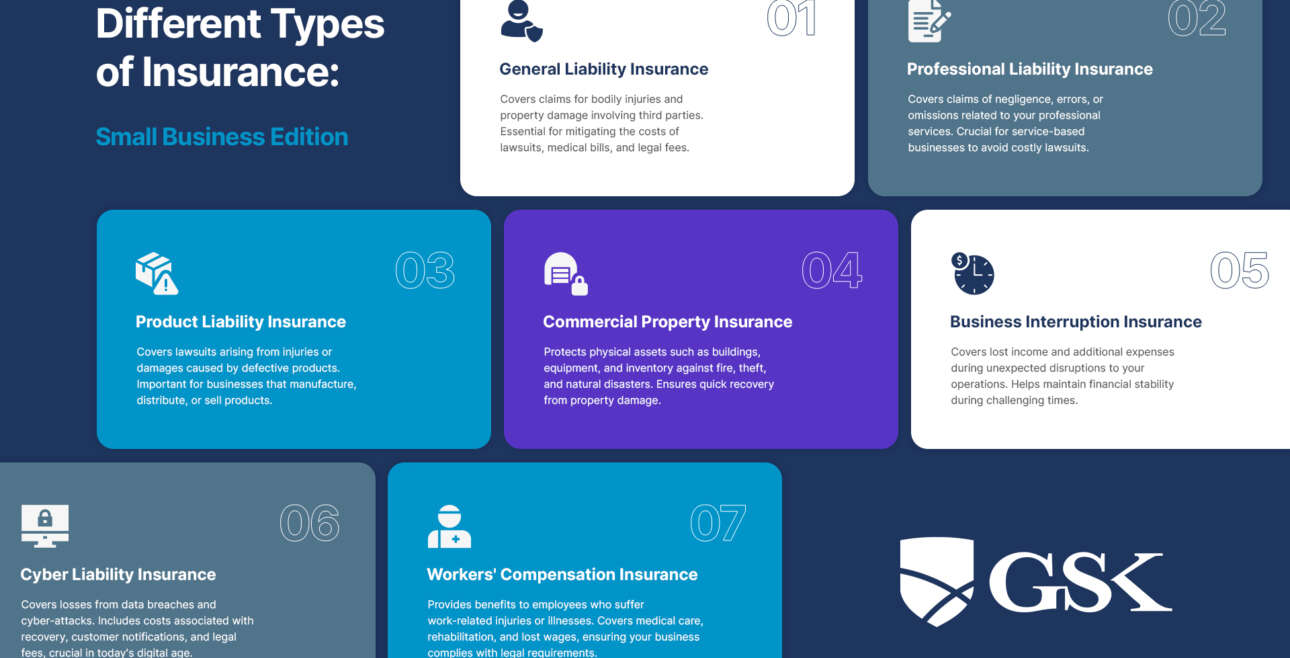
Types of Small Business Insurance
Did you know that 40% of small businesses will experience a property or liability loss in the next 10 years? Insurance is not just a safety net; it’s a crucial component of your business plan. Let’s dive into the various types of insurance that can shield your business from unexpected hurdles.
Choosing the right insurance policy can feel overwhelming. BUT knowing the differences can make all the difference when the unexpected happens. Here’s the deal: understanding the types of insurance available can protect you from catastrophic financial hits.
General Liability vs. Professional Liability Insurance
First, let’s tackle the two most common forms of business insurance: General Liability Insurance and Professional Liability Insurance. General Liability covers physical risks like damage to property or bodily injury. On the other hand, Professional Liability, also known as Errors and Omissions Insurance, protects against claims of negligence in professional services.
General Liability is best suited for businesses with physical locations and customer foot traffic. BUT if you provide services or advice, Professional Liability is your go-to. Here’s a simple comparison:
| Insurance Type | Benefits | Limitations |
|---|---|---|
| General Liability | Covers bodily injury and property damage | Does not cover professional errors |
| Professional Liability | Covers negligence in services provided | Excludes physical damage claims |
Pro Tip: Evaluate your business model to choose the right type of liability insurance.
Property, Business Interruption, and Workers’ Compensation Insurance
- Property Insurance – Safeguards your business assets from fire, theft, and certain natural disasters.
- Business Interruption Insurance – Covers lost income when your business operations are halted due to a covered event.
- Workers’ Compensation Insurance – Provides benefits to employees injured on the job, mandatory in most states.
It’s crucial to understand each type of insurance to ensure your business stays resilient and compliant. Here’s a table to keep things straightforward:
| Insurance Type | Coverage |
|---|---|
| Property Insurance | Business property and assets |
| Business Interruption | Lost income due to operational downtime |
| Workers’ Compensation | Employee injury and lost wages |
Factors to Consider When Choosing Small Business Insurance

Did you know that 40% of small businesses will experience a property or liability loss in the next ten years? That’s a massive risk to take without proper insurance. So, how do you choose the right coverage?
Here is the deal: It’s not just about finding the cheapest option. You need to evaluate several key factors to ensure you’re making a smart, informed decision for your business.
Understanding Coverage Limits and Deductibles
First thing’s first: coverage limits and deductibles are crucial. Coverage limits determine the maximum amount your insurance will pay in the event of a claim. Go too low, and you might not be fully protected. Go too high, and you could be overpaying for coverage you’ll never use.
Deductibles, on the other hand, are the amounts you’re responsible for before your insurance kicks in. A higher deductible usually means lower premiums, BUT it also means you’ll pay more out of pocket when something goes wrong.
Pro Tip: Choose a deductible amount that you can afford to pay at any time without stressing your cash flow.
Premium Costs and Budget Considerations
Let’s talk money: premium costs. They can make or break your budget. While it’s tempting to opt for the lowest premium, remember that you get what you pay for.
Cheap premiums might lead to inadequate coverage. So, balance is key. Look for policies that offer value for money—adequate coverage at a reasonable cost.
Tailoring Insurance to Industry-Specific Needs
Every industry has its quirks. Whether it’s special equipment, unique liabilities, or industry regulations, your business faces specific risks. That’s why you need insurance tailored to your sector.
For example, a tech startup will have different needs compared to a retail shop. Consult with an insurance expert who understands your industry to ensure you’re covered where it matters most.
Cost Management Strategies for Small Business Insurance
Did you know that 40% of small businesses overpay on their insurance? The good news is you don’t have to be one of them.
Effective cost management can make a huge difference in your bottom line. Let’s explore how to keep those insurance costs from eating up your budget.
Bundling Policies for Savings
One of the easiest ways to cut costs is by bundling your policies. When you purchase multiple types of insurance from the same provider, you often qualify for a discount.
- Consider combining general liability and property insurance.
- Look for a provider that offers multi-line discounts.
Pro Tip: Always review the bundled policy for coverage gaps. Sometimes saving a few bucks upfront can cost you later.
Increase Deductibles to Lower Premiums
Here’s the deal: higher deductibles typically mean lower premiums. If your small business can handle a higher out-of-pocket expense in the event of a claim, this strategy can significantly reduce your insurance costs.
- Evaluate your cash flow to determine a feasible deductible increase.
- Work with your insurance advisor to adjust deductibles without sacrificing necessary coverage.
Maintain a Good Safety Record
Insurance companies reward businesses with strong safety records. This means fewer claims and, in turn, lower premiums. Regular safety audits and employee training can go a long way.
- Implement a safety program and keep detailed records.
- Regularly update safety measures and train your team.
Pro Tip: Ask your insurance provider if they offer discounts for completing safety courses or certifications.
Regular Policy Reviews for Cost Optimization
Policies that are “set it and forget it” could be costing you. Regularly reviewing your insurance can uncover savings and ensure you’re not over-insured.
- Schedule annual reviews with your insurance provider.
- Look for coverage overlaps or unnecessary policies.
Stay vigilant and proactive to keep your insurance working for you, not against you.
Legal and Regulatory Aspects of Small Business Insurance
Did you know that a single lawsuit can sink your business? This isn’t just fear-mongering; it’s a reality for many small business owners.
Understanding the legal requirements for small business insurance is crucial. Not only does it protect your business, but it also keeps you compliant with the law, avoiding fines and penalties.
Mandatory Insurance Requirements by Industry
Different industries have unique insurance requirements. For instance, if you’re in construction, you likely need contractor’s liability insurance. But if you run a tech startup, you might need cyber liability coverage to protect against data breaches. Here’s the deal: Each industry has its own set of rules and ignoring them can lead to serious trouble.
Non-compliance isn’t just a slap on the wrist. It can lead to hefty fines, business shutdowns, or even jail time in extreme cases. So, what can you do to ensure compliance? Start by researching the specific insurance laws for your industry and state.
Consequences of Non-Compliance
Non-compliance can turn your business dreams into a legal nightmare. Failing to adhere to insurance regulations means you’re operating outside the law, and that’s a risky game. Aside from fines, you could face lawsuits that demand compensation you can’t afford.
Think you can just wing it? Think again. When a claim arises and you’re uninsured or underinsured, it’s your personal and business assets on the line. Protect yourself by staying informed.
Common Legal Terms in Business Insurance
Getting familiar with legal jargon is half the battle. Understanding terms like “premium,” “deductible,” and “policy limit” can make navigating insurance policies a breeze. You don’t need a law degree, but a cheat sheet helps.
Here’s a quick reference:
| Legal Term | Definition |
|---|---|
| Premium | The amount you pay for your insurance policy. |
| Deductible | The amount you pay out-of-pocket before insurance kicks in. |
| Policy Limit | The maximum amount an insurer will pay under a policy. |
| Exclusion | Specific conditions or circumstances not covered by the policy. |
Pro Tip: Review your policy’s exclusions carefully to avoid surprises when filing a claim.
Real-Life Case Studies of Small Business Insurance Success Stories

Did you know that nearly 40% of small businesses will experience a property or liability loss in the next ten years? Having the right insurance can be a game-changer. Let’s dive into some real-life case studies where small businesses not only survived but thrived thanks to smart insurance strategies.
These stories illustrate how proper coverage can make the difference between staying afloat and sinking under unexpected challenges. From property damage to liability claims, we’ll see how insurance played a pivotal role in safeguarding these businesses.
The Bakery That Bounced Back From Fire Damage
Imagine waking up to find your bakery, the heart of your small business, engulfed in flames. This was the nightmare scenario for Jane, owner of a quaint bakery in downtown. The fire could have spelled the end, BUT thanks to her comprehensive property insurance, Jane didn’t lose hope. Her policy covered everything from physical damage to business interruption costs.
Within months, Jane reopened her doors, stronger and more resilient than ever. Her bakery is now a local favorite, and Jane learned a vital lesson: “Insurance isn’t just a safety net; it’s peace of mind.”
“Our insurance was our lifeline. Without it, rebuilding would have been impossible.” – Jane, Bakery Owner
Tech Startup Saved by Cyber Liability Coverage
Here’s the deal: cyber threats are real, and they don’t discriminate based on business size. When a tech startup faced a massive data breach, it seemed like the end of the road. BUT, their foresight in securing cyber liability insurance turned the tables. The policy covered legal fees, customer notification, and even took care of PR costs to restore customer trust.
This insurance not only saved the day but also helped the startup to implement stronger security measures moving forward, illustrating how a proactive approach to insurance can safeguard the future.
“We were able to focus on improving our security rather than worrying about financial ruin.” – Mark, Tech Startup Founder
Landscaping Company and Liability Claims
In the world of small business, accidents happen. A landscaping company faced a hefty lawsuit when a client tripped over equipment on site, resulting in serious injuries. Their general liability insurance picked up the tab, covering legal expenses and medical costs.
Pro Tip: Always evaluate your risk areas and select coverage that addresses those specific vulnerabilities. This smart move kept the company afloat and allowed them to continue serving customers without a hitch.
“The right insurance shielded us from a potential financial disaster.” – Lisa, Landscaping Business Owner
Last Word
In conclusion, arming your small business with the right insurance is like equipping a warrior with the best armor and shield. It’s about safeguarding your dreams and ensuring that even when the battle gets tough, your business stands strong. Remember, investing in insurance is not just about compliance or ticking a box; it’s about fortifying your business for the long haul. Stay proactive, review your policies regularly, and never underestimate the power of being prepared.
Frequently Asked Questions
What is the most common type of insurance needed for small businesses?
General liability insurance is often the most common type needed as it covers accidents, injuries, and negligence claims.
How does insurance contribute to business continuity?
Insurance provides financial support during unforeseen events, helping businesses maintain operations without severe financial setbacks.
What’s the difference between general liability and professional liability insurance?
General liability covers physical risks, while professional liability covers service errors and negligence.
Can small businesses reduce their insurance costs?
Yes, by bundling policies, increasing deductibles, and maintaining a good safety record, among other strategies.
Why is it important to consider industry-specific needs when choosing insurance?
Different industries face unique risks and liabilities, so tailored coverage ensures adequate protection.
What are the consequences of not having required insurance?
Non-compliance can lead to legal penalties, fines, and potentially devastating financial losses.
